North Carolina readers: The current state regulations provide spring turkey seasons, not a fall season. Use these fall observations for scouting, or apply the hunting tactics only in a state and area with an open fall season. Confirm legal birds, methods and bait restrictions before a trip.
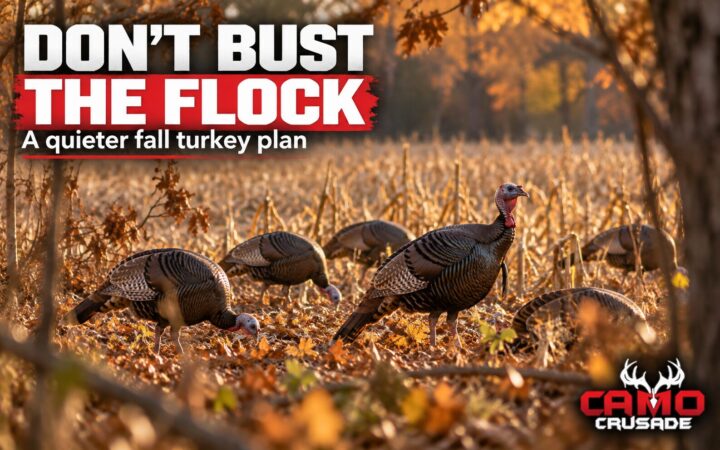
Spring turkey hunting is mostly about one thing: a gobbler looking for a hen. Fall is a different game. The birds are grouped up, they are focused on food and each other, and the call that works on one bunch can be ignored by the next. A Field & Stream article by Brian Lovett makes the case that the first job in fall is figuring out what kind of flock you are dealing with.
Know who you are talking to
According to Field & Stream, fall turkeys tend to sort into a few groups: adult gobblers, hens without poults, hens with their broods, young males a year or so old, and big family flocks where several hens and their young have joined up. Those groups may share a feeding area or roost, but they often travel apart.
Each group talks differently. Young birds make kee-kees, a short run of rising whistles, and kee-kee runs that end in rough yelps. Hens with broods use long assembly yelps to pull scattered young back together. Adult gobblers are quieter in fall, with slow, raspy yelps and clucks, though they still gobble now and then. The article recommends trying male yelps and clucks for male groups instead of relying only on the hen calling that worked in spring. Treat that as a starting point, not a rule that a gobbler can never answer a hen sound.
Ohio call maker Marlin Watkins put it plainly to Field & Stream: “A young gobbler is not coming to hen sounds.”
Calling a broken-up flock
When a family flock gets separated, Watkins starts with kee-kees and kee-kee runs, then copies the first bird that answers. As birds close the distance, he softens his calling but doesn’t stop. For male groups, his approach is to allow more time before using gobbler yelps and clucks. Those intervals are his personal method, not a timetable every flock will follow. Gobbling can also draw another hunter toward you; consider that risk before using male vocalizations.
Patience is the theme. The article notes family birds may regroup in 20 to 30 minutes, while adult hens and toms can take much longer, and describes one flock that stayed silent for three hours before a single cluck led to a kill.
Watkins describes using dogs to separate flocks. Dog use and other methods vary by jurisdiction, so check the current rules before trying that approach. Never run with a loaded firearm or rush toward a flock or turkey sounds where another hunter could be present. A quiet setup along a known route is another option. Stay on land where you have permission.
Hunting solo without a dog
Vermont hunter and contest caller Brett Ladeau gave Field & Stream a simpler plan for one person: scout roosts in the evening, mark them on a mapping app and set up close the next morning. If roost spots dry up, he moves between known turkey areas and calls cold, matching his calls to the birds he expects, kee-kees and assembly yelps for family groups, gobbler yelps for males.
Putting it to work in the Southeast
Fall opportunities vary widely, and an older national state count is not a substitute for current regulations. Confirm that the season is open in the exact area, along with legal birds, methods, required licenses and tags, before treating a turkey encounter during another hunt as a harvest opportunity.
A few habits help this week:
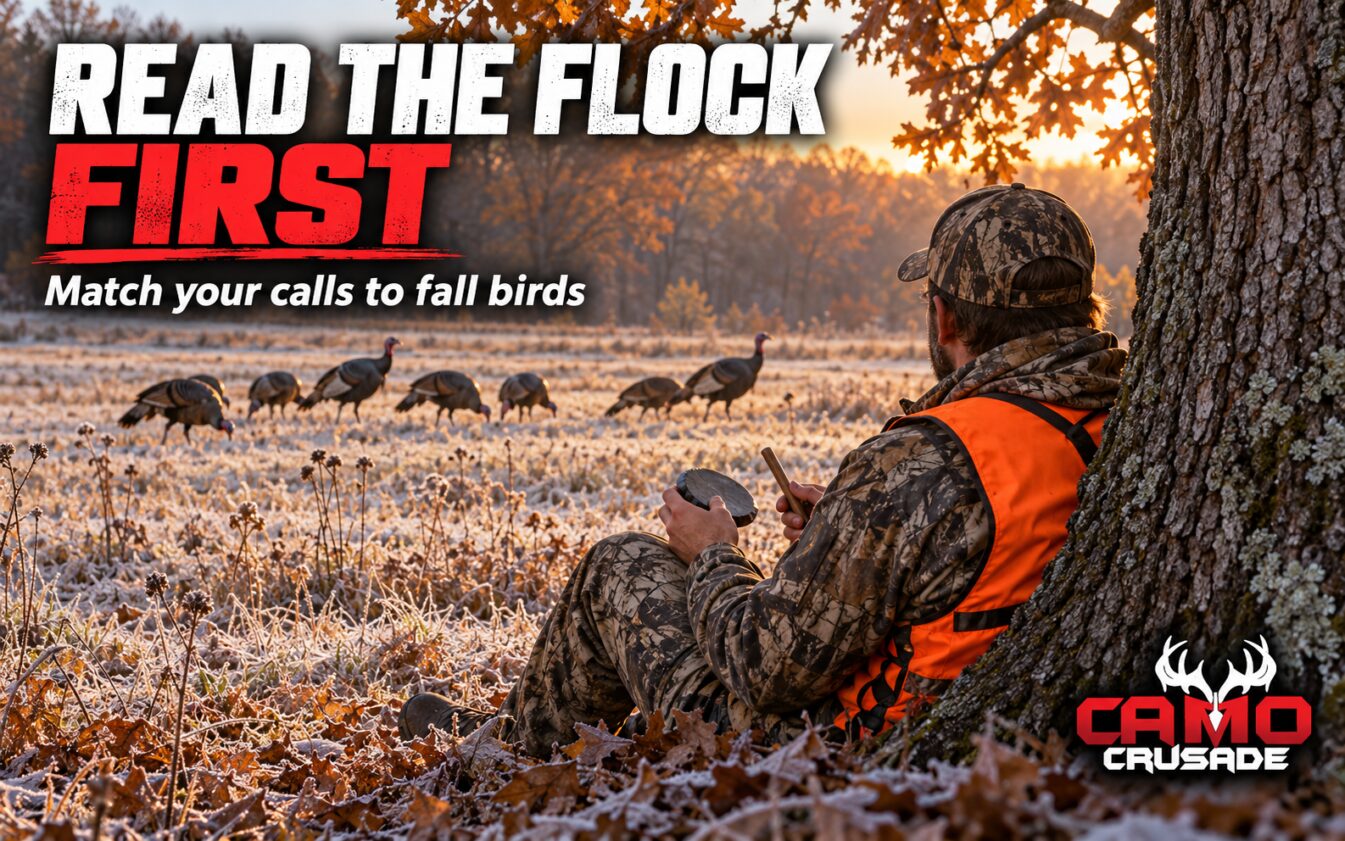
- Watch before you call. Glass fields and listen at fly-down to learn whether you are seeing a big family flock or a few long-bearded birds.
- Carry more than one call. A mouth call for kee-kees and a slate or box for yelps and clucks covers most of what you will need.
- Wear blaze orange where it is required. Fall turkey seasons often overlap gun deer seasons. Sit with your back against a tree wider than your shoulders and never stalk turkey sounds.
- Be sure of your bird and what is beyond it. Know whether hens are legal in your area before you shoot, and keep shots inside your gun’s patterned range.
Fall turkeys reward the hunter who listens more than he calls at first. Learn the flock, speak its language and give it time. Check your state’s current turkey regulations before heading out.