North Carolina readers: The current state regulations provide spring turkey seasons, not a fall season. Use these fall observations for scouting, or apply the hunting tactics only in a state and area with an open fall season. Confirm legal birds, methods and bait restrictions before a trip.
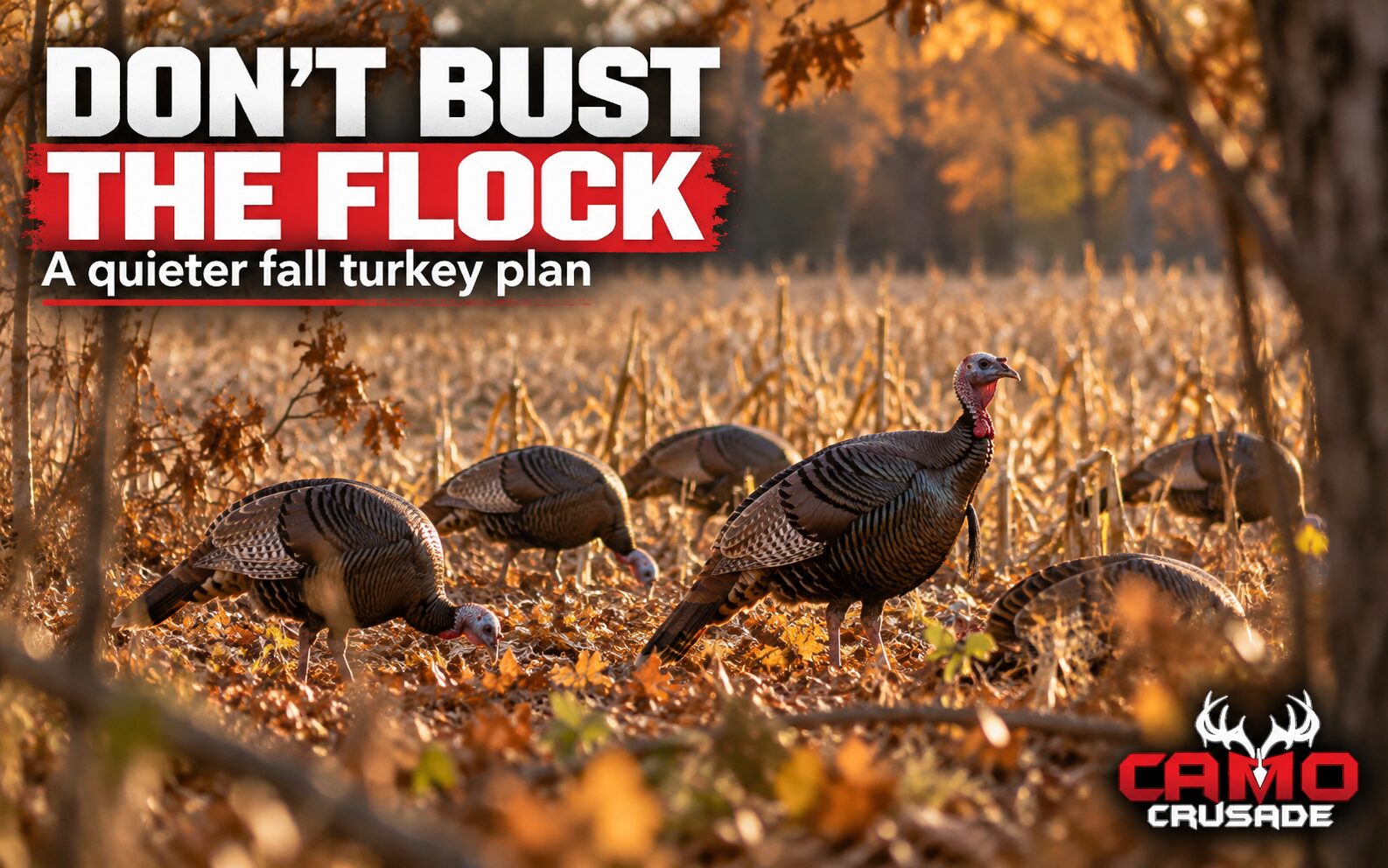
The classic fall turkey tactic is to bust a flock and call the scattered birds back. It works, and it can be a thrill. But if you hunt a small farm, a family tract or a little lease, repeatedly disturbing the only flock on the place may make it harder to hunt. There is no fixed number of days it will stay away. An Outdoor Life article by Tom Carpenter makes the case for a quieter approach: hunt fall turkeys the way you would hunt deer, by learning their routine and getting in front of it.
Carpenter developed his method on small Wisconsin properties, but the logic carries well to the patchwork farms and timber tracts common across the Southeast.
Start with food and roosts
Fall birds are driven by their stomachs. Outdoor Life points to three main food types: green fields like pasture and hayfields that still hold insects for young birds, acorns, which turkeys tend to favor when they’re falling, and harvested grain fields. Carpenter lists corn first, then soybeans, with wheat, milo and sunflowers also drawing birds.
Patterns change quickly as leaves drop, fields brown and crops come out, so the article suggests saving your hardest scouting for the few days before you hunt. Watch from a distance with binoculars from a road or high ground. At first light and dusk, listen for birds flying down or settling in. Midday, walk under likely roost trees and look for droppings and feathers. Some flocks use one roost over and over; others rotate.
That information is worth gathering even if your state has no fall season. October observations help you learn the property, but seasonal changes mean you should scout again before spring rather than assume the same roosts and feeding routes will hold.
Hunt the travel lanes and loafing spots
Once you know where birds sleep and eat, Carpenter’s advice is to set up along the routes in between, much like sitting a deer trail between a bedding area and a food source. He leaves the roost itself alone until late in the season.
Where the season and method are legal, a field-edge setup can let you watch a familiar route without entering the roost. After a shot, keep the firearm pointed safely and promptly determine whether the bird is down. Recover a wounded bird without delaying just to preserve a future hunting spot; follow local recovery and tagging rules.
Turkeys also rest during the day. From late morning into the afternoon, look for scratched-up leaves and bare spots in cover along their travel routes, and set up there.
Call, and don’t worry about perfection
Outdoor Life covers five fall calls: the yelp, the softer cluck, the contented purr, the lost-bird kee-kee and the kee-kee run young males make. A mouth call, box and slate will handle all of them. Carpenter’s encouragement to newer hunters: “Calling turkeys in the fall is much more forgiving than in the spring.” Just avoid the sharp alarm putt.
The article also notes fall turkeys include hens, young hens, jakes and gobblers. Carpenter chooses to leave adult gobblers for spring. Whether hens are legal where you hunt in fall is a question for your state’s regulations, and individual hunters may choose to pass on hens even where the regulations allow a harvest.
Your plan for this week
- Check the rules first. Confirm your state has a fall season, which counties and weapons are open, and whether hens are legal.
- Scout from a distance. Note which fields and oak flats the birds use and when, without walking through them.
- Get permission and know boundaries. Turkeys don’t read property lines, but you have to. Never follow birds onto land you can’t hunt.
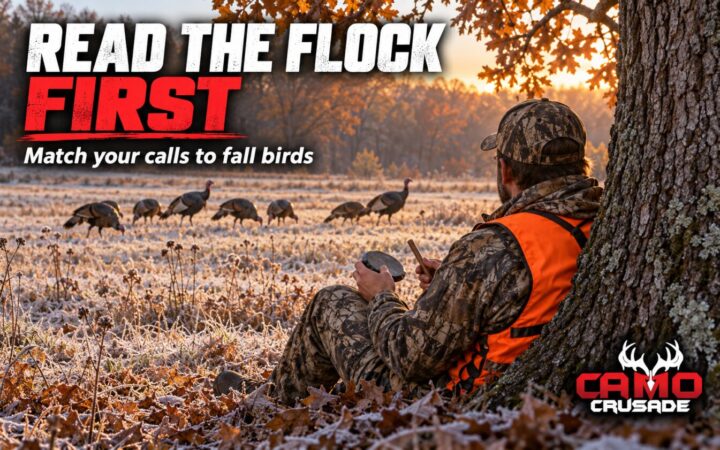
- Stay safe. Fall turkey and gun deer seasons often overlap. Wear blaze orange where required, sit against a tree wider than your shoulders and wear a harness if you hunt from an elevated stand.
- Identify your target. Never shoot at movement or sound. Be sure of your bird and what’s behind it.
The scatter-free approach won’t fit every hunter, and Carpenter admits scattering a flock can be fun and effective. But on a small piece of ground, keeping the same birds around all fall may be the best plan you have. Check your state’s current turkey regulations before you go.