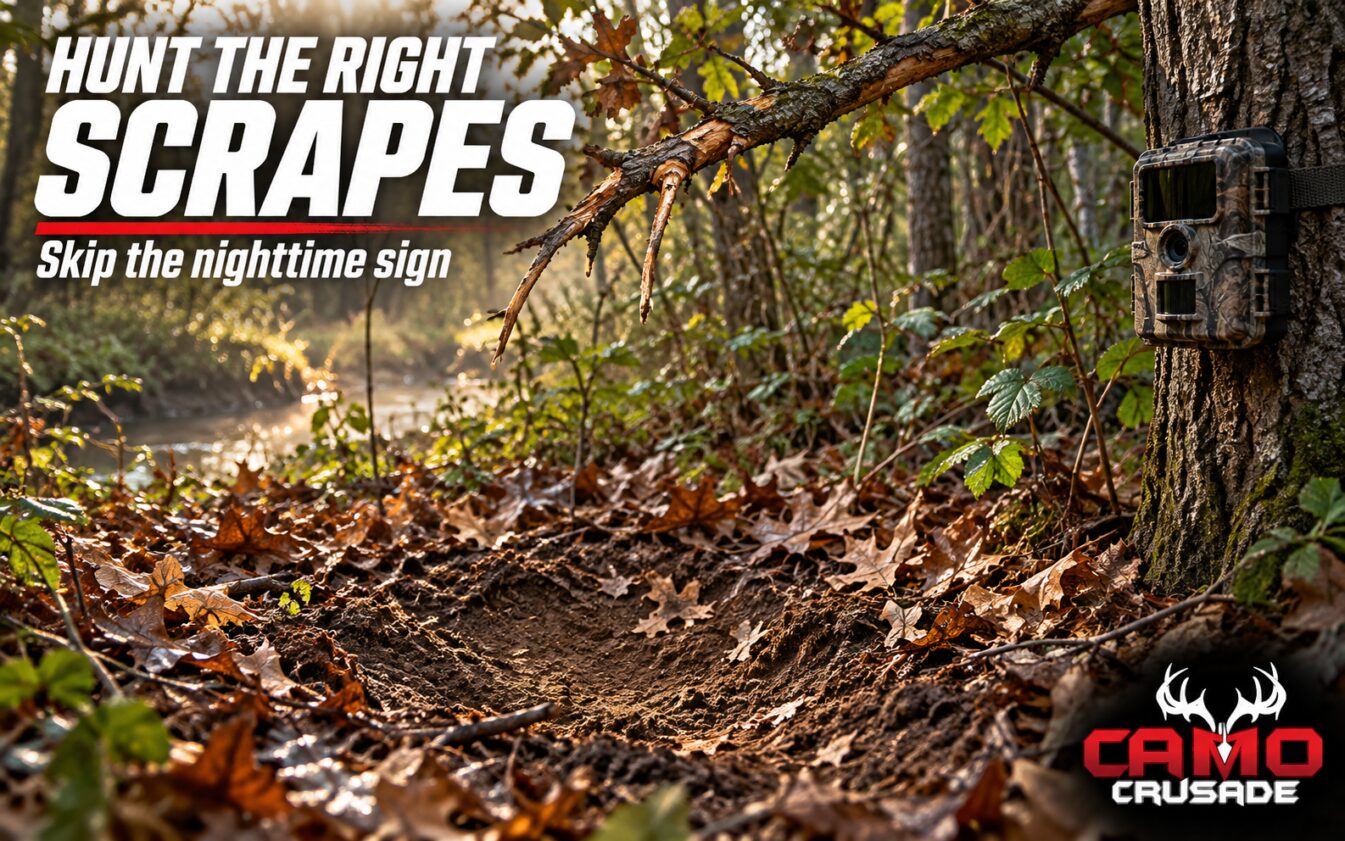
This is the time of year when the woods start filling up with pawed-out dirt and broken licking branches. For a lot of hunters, a fresh scrape feels like a sure thing. Field & Stream’s longtime whitetail writer Scott Bestul had a more honest take in an October 21 article: scrapes can be “pay dirt” or “fool’s gold,” depending on which ones you hunt.
His point was that far more hunters come up empty over scrapes than succeed. The difference comes down to picking the right scrape, at the right time, in the right weather.
Location Comes First
The scrapes most likely to see a buck in daylight are close to thick cover and bedding areas. In the late pre-rut, bucks stay tight to their core areas during legal shooting hours, so the scrapes near those spots are your best bet.
Field & Stream listed some good places to look: logging roads, staging areas just off a food source, edges where thick cover like a swamp or a clearcut meets open hardwoods, and secluded feeding spots like an oak ridge or a small food plot ringed by thick cover. Southern hunters will recognize a lot of those places: the edge of a cutover, a creek bottom thicket next to a hardwood ridge, a pine plantation road that runs beside a swamp.
A line or cluster of scrapes suggests a buck is spending real time in an area. On the other hand, Bestul wrote that scrapes on open field edges are usually nighttime sign unless your trail camera says otherwise. A single scrape, especially one without a heavily worked licking branch overhead, rarely deserves a sit.
Weather and Timing
Bestul describes warm afternoons as less promising for scrape hunting; that is a hunting observation rather than a rule that applies to every deer or region. The article stressed that a change in temperature matters more than any particular number. Bestul favors a substantial cooling trend, but a particular temperature drop is not a proven universal trigger. Penn State’s examination of one October front found large differences among bucks and did not establish a dependable increase in average movement. Light rain or mist may also prompt bucks to freshen scrapes, though Bestul admitted he had no hard data to back that up.
Timing depends on where the scrape is. Consider a morning setup near cover only when entry will not disturb deer returning to bed. Near food, recent afternoon photos can justify an evening sit. Neither location guarantees a legal-hours visit. And if you’re torn between a fresher scrape with a bad wind and an older one with a good wind, the article was clear: take the good wind.
Scraping also has a shelf life. As the rut kicks in, bucks spend less time working scrapes and more time chasing does, so act soon after you find fresh sign.
Use Your Cameras Without Spooking Deer
Bestul describes frequent checks at cameras he can reach with little disturbance. That approach should not become a reason to walk into bedding cover every few days. Prefer remote checks where legal, or combine card checks with necessary trips along an existing access route. Follow public-land vehicle and camera restrictions. A recent daylight image is useful evidence, but cellular transmission delays and a single appearance do not establish a repeatable pattern.
Putting It to Work in the Southeast
Rut timing across the South varies a great deal, so scraping activity in your area may be ahead of or well behind what a northern writer is seeing. Use your own cameras and your state agency’s rut data to judge where your deer are in the cycle.
- Scout carefully along low-impact routes. Midday does not make it harmless to enter suspected bedding cover.
- Skip lone field-edge scrapes unless a camera shows daylight visits.
- Keep your scent and boot tracks down on the way in, and play the wind every time.
- Know your local rules on scents, mock scrapes and attractants. North Carolina’s wildlife agency, for example, restricts possession and use of cervid excretions for attracting or scouting wildlife, lists exceptions, and links additional area restrictions. Check the current agency rules and the product label before carrying or using a natural scent; do not assume a store-bought product is permitted everywhere.
Be respectful on leased and private ground. Ask before hanging cameras on someone else’s land, and follow your state’s rules on camera placement on public land.
As always, wear a full-body safety harness in the stand and blaze orange where required. Check your state’s current regulations before you hunt.