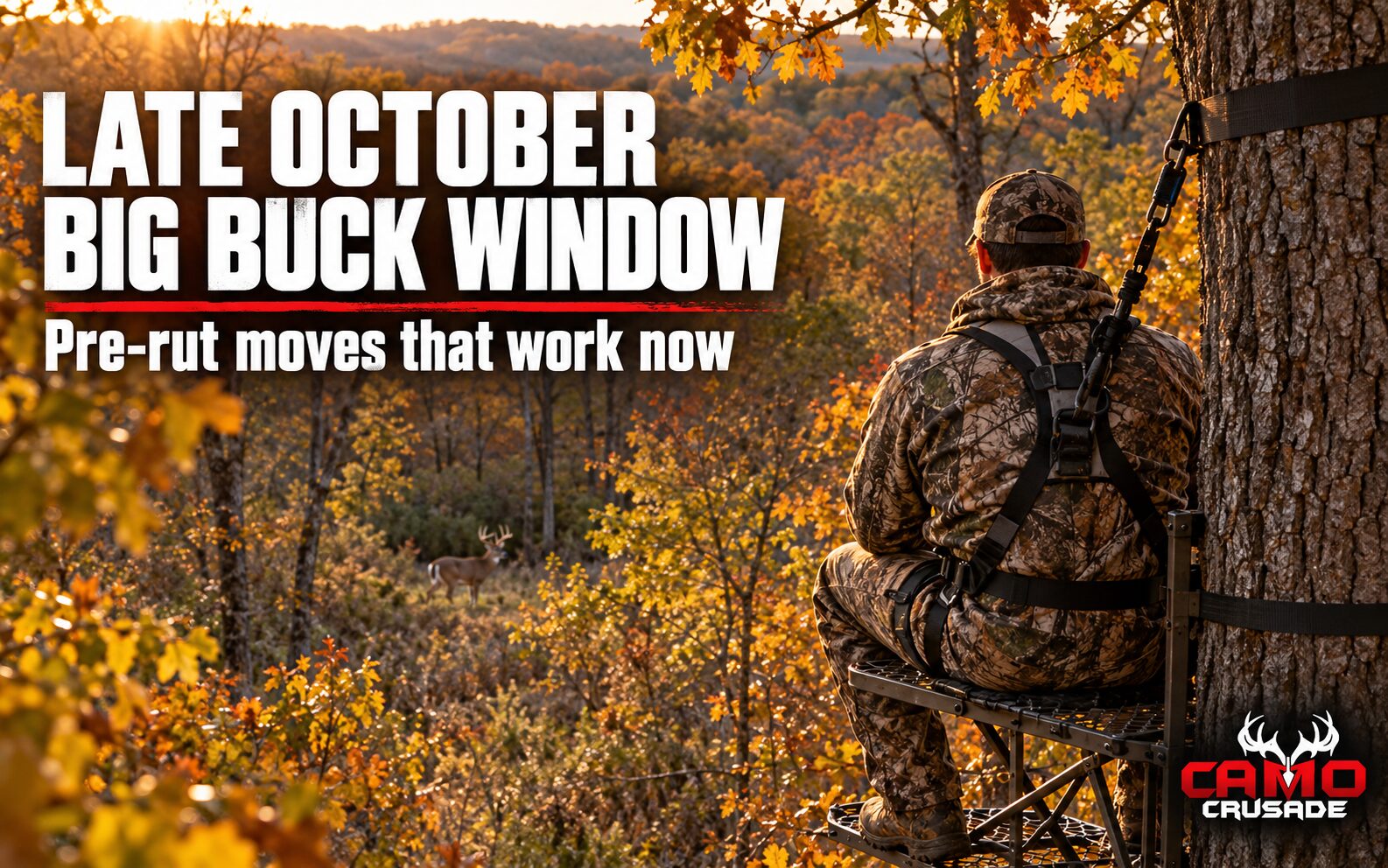
A lot of deer hunters save their vacation days for mid-November and treat late October as a warm-up. Outdoor Life made the case this month that this thinking may be backward, at least for hunters chasing one particular mature buck.
In a piece by Josh Honeycutt, the magazine laid out why the final stretch of October is often a better window than the peak of the rut. The core argument is simple: bucks are still living where you scouted them, but they are getting bolder by the day.
Bucks Are Home, and Getting Restless
Once the rut takes hold, a buck you’ve watched all season can wander off after a doe and turn up a mile away. A buck may still be using familiar cover before peak breeding, but current camera activity matters more than assuming his core area or routine has stayed unchanged. That makes your summer and early-fall scouting worth more now than it will be in two or three weeks.
Outdoor Life argues that increasing daylight activity and pre-rut behavior can create an opportunity before peak breeding. Its article does not identify a particular movement study supporting that broad claim, so treat it as hunting guidance rather than a prediction for every buck. Light calling may be worth trying when local observations show pre-rut activity, but responses vary.
Where peak breeding is still ahead, a recent pattern between secure cover and food can provide a starting point. In parts of the South, however, late October is not the same stage of the breeding cycle. Build a plan around your own deer, not a universal calendar.
Food and Weather Do the Heavy Lifting
In much of the Southeast, acorns drive deer movement this time of year. Check the trees on your property instead of assuming every white oak has stopped producing. Fresh acorns with tracks, droppings and disturbed leaves offer a better reason to consider a setup than an oak ridge chosen from memory. If scouting on foot is necessary, keep it brief and avoid suspected bedding cover; midday is not disturbance-free.
Outdoor Life favors hunting around cold fronts, but that is not a guarantee of increased movement. Penn State’s Deer-Forest Study found substantial variation among collared bucks around one October front and said more data would be needed to isolate an effect. Use a forecast to plan safe access and a favorable wind, then weigh it alongside fresh sign and your camera records.
Mornings deserve a second look as well. If your own sightings show a buck traveling toward cover during legal morning hours, a morning sit may be worthwhile. The tradeoff is the walk in: plan a quiet entry route that doesn’t cross the food source in the dark.
A Wild Card and an Edge
Outdoor Life also mentioned that a small share of does come into estrus early, ahead of the main rut. When that happens, several bucks can pile onto one doe and chasing starts early. The percentages in that discussion were not tied to a named study. Do not use them to forecast an early chase on your property.
The last advantage may be the biggest one for public-land hunters: fewer people in the woods. Pressure can be lighter before popular rut vacation dates, but season openings and local access can produce the opposite result. Check actual use of your hunting area instead of assuming the woods will be quiet.
What Southeast Hunters Can Do This Week
Rut timing varies widely across the South, even within a single state. Some areas peak in early November, others not until December or later. Check your state wildlife agency’s rut or breeding data for your county before you plan around a calendar written for the Midwest. If your local rut is still weeks away, late October may be closer to an early-season pattern, and food will matter more than calling.
- Scout midday for food. Find the oaks still dropping and look for fresh droppings and tracks underneath.
- Watch the forecast. Prioritize a safe sit, favorable wind and current deer activity; a cold front alone is not a reason to abandon a proven setup.
- Try light calling. A few grunts or a short rattling sequence near bedding cover can pull a curious buck in.
- Guard your entry and exit. Play the wind and keep your access routes away from where deer feed and bed.
Whatever you do, wear your safety harness from the moment you leave the ground until you’re back on it, and wear blaze orange where your state requires it. Take only shots you’re confident in, and give a hit deer time before you start trailing.
Seasons, weapon dates and bag limits differ by state and even by county across the Southeast, so check your state’s current regulations before you go.