There is no prize for running the farthest before you start fishing. A sensible blackfin plan begins with a regional opportunity, suitable conditions and a boat and crew prepared for the whole trip.
Sport Fishing’s South Florida blackfin coverage discusses several presentations, including drifting and live-bait methods. Carolina Sportsman’s summer reporting describes a different, trolling-focused fishery off the Carolinas. Neither is a coastwide instruction to head offshore on the next available weekend.
Find the right report for the trip
Ask when a report was written, which port it concerns and what kind of vessel made the run. A South Florida spring pattern is not a reliable promise of an autumn Carolina bite. Use current local information to decide whether blackfin are a realistic target, then build the plan around that answer.
If you are new to offshore fishing, an experienced local captain can help you understand the fishery and the day’s decisions. Tell the captain your experience level and goals. A shorter, manageable introduction can teach more than an ambitious run spent uncomfortable or unprepared.
Keep the fishing method manageable
Choose a presentation the crew understands. Agree on who handles a rod, who clears lines and who remains responsible for the boat. Keep the deck clear and prepare landing tools and legal catch storage before lines go out.
Do not copy a large live-bait or trolling spread simply because an experienced crew uses one. More lines create more work when fish bite, conditions change or a turn is needed. Start with what your boat and crew can control, and adjust with guidance from someone who knows that water.
Read the marine forecast for the whole route
The National Weather Service provides separate coastal and offshore forecasts, along with observations and warnings. Check the areas you will cross and the return window, including wind, seas and thunderstorms. A favorable beach forecast is not an offshore go-ahead, and yesterday’s calm photograph is not weather information.
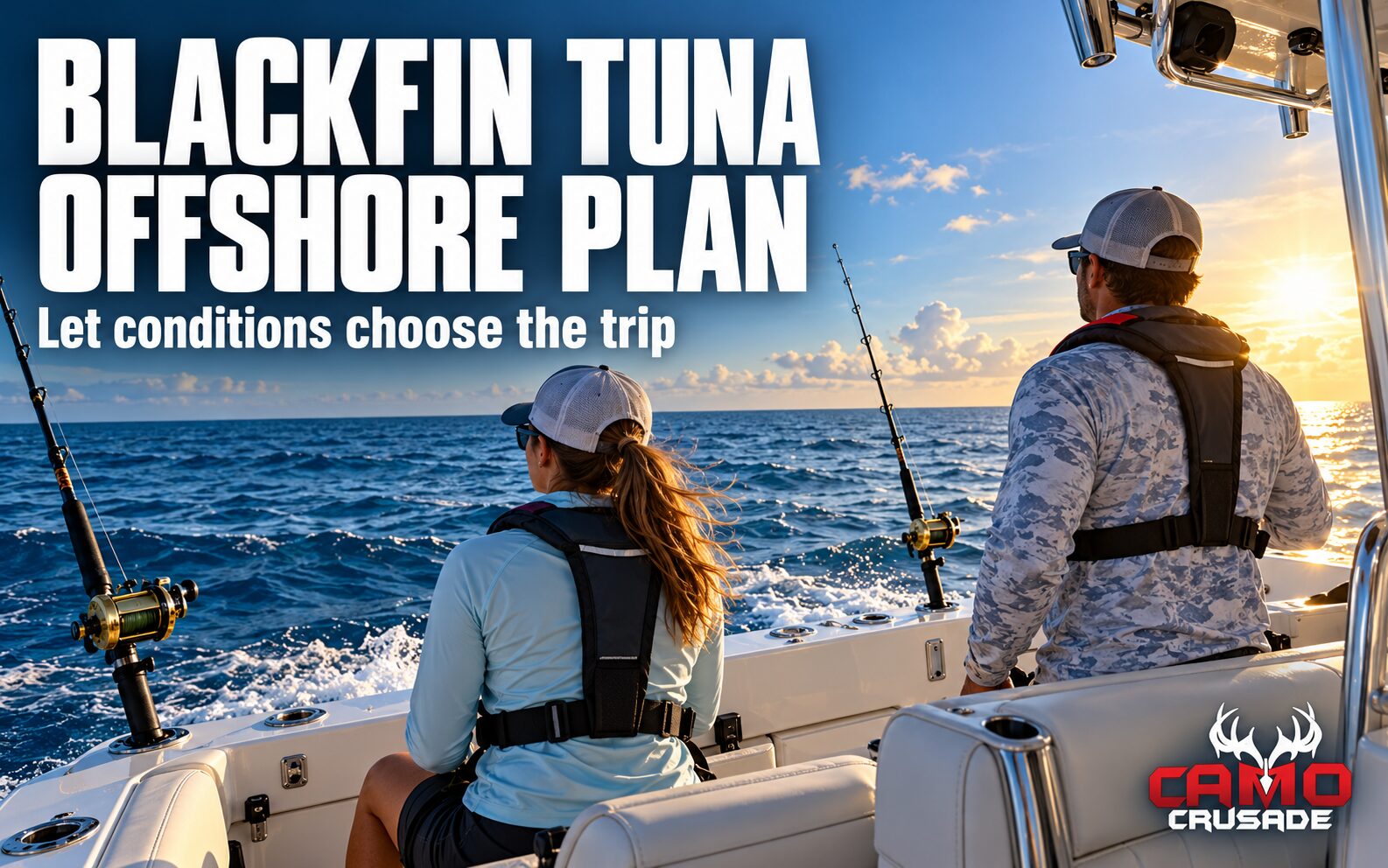
Wear life jackets, carry appropriate communications and emergency equipment, and leave a float plan with someone ashore. Set conservative limits before departure and turn back when conditions exceed them.
Confirm current license, species-identification, permit, bag, possession and landing rules for your departure and fishing areas. Tuna species are managed differently; a rule heard about bluefin should not be assumed to cover blackfin. Prepare for the fishery you are actually visiting.