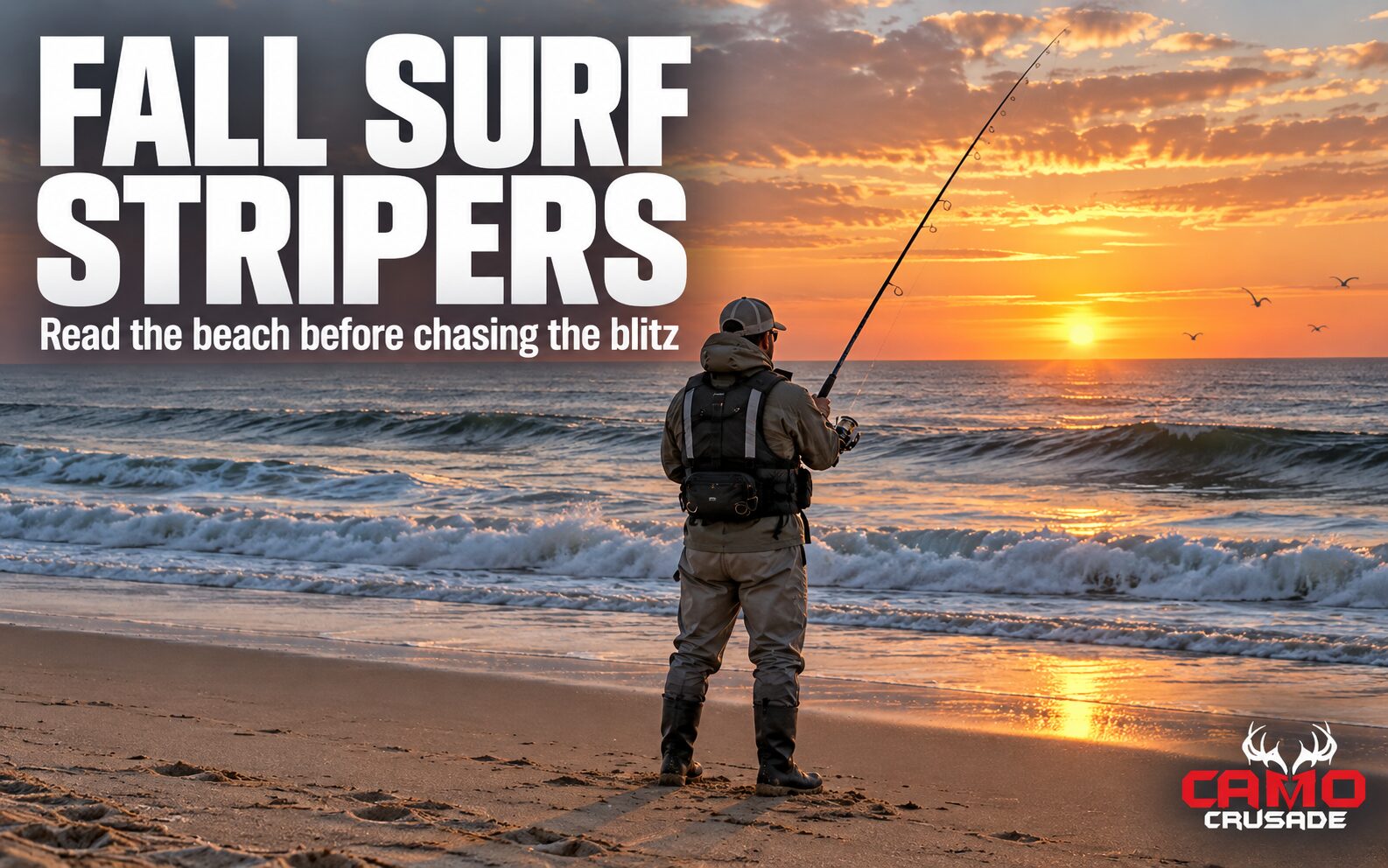
A photograph of birds diving over a striper blitz can make the whole coast look easy. The beach you reach may be quiet. That does not mean the trip is over; it means your plan needs something more durable than yesterday’s photograph.
Salt Water Sportsman’s fall-run coverage describes several ways to reach striped bass, including working plugs through surf structure. For a shore angler, that is the useful part to build around: learn a fishable stretch of beach before chasing every report up the highway.
Give one beach a proper look
Visit in daylight and identify access, deeper-looking troughs, cuts and safe places to stand. Note the tide stage. The feature you can see at lower water may be harder to recognize when you return later.
Keep several legal stops in reserve rather than a long list of rumored hot spots. If the first beach is unsafe or access is closed, move to the backup. Do not climb onto an unfamiliar jetty or enter heavy surf simply because birds are working farther out.
Choose a lure you can control
Start with a baitfish-style lure that runs cleanly in the conditions. Cast through a defined lane and compare deliberate retrieves. If a feeding school appears, avoid throwing across other anglers’ lines or into birds. Salt Water Sportsman’s advice includes working the edge of surface activity, rather than assuming the middle is the only place worth casting.
Carry only the plugs and tools you can manage securely. Hooks, a loose bag and breaking waves make a poor combination. Keep an eye on the water between casts and leave room to retreat as the tide or surf changes.
Bait fishing needs its own rule check
Do not translate a lure article into permission to fish any bait rig. Massachusetts currently requires inline circle hooks when recreational anglers target stripers with whole or cut natural bait, with a stated exception for natural bait attached to an artificial lure. Other jurisdictions have their own detailed requirements.
Check current seasons, size and bag limits, hook rules and beach restrictions where you will fish. Wear suitable flotation and dress for the water temperature. Arrange your release tools before the first cast, and keep the next fish’s welfare ahead of the next photograph. A workable beach plan is worth bringing back even after a quiet morning.