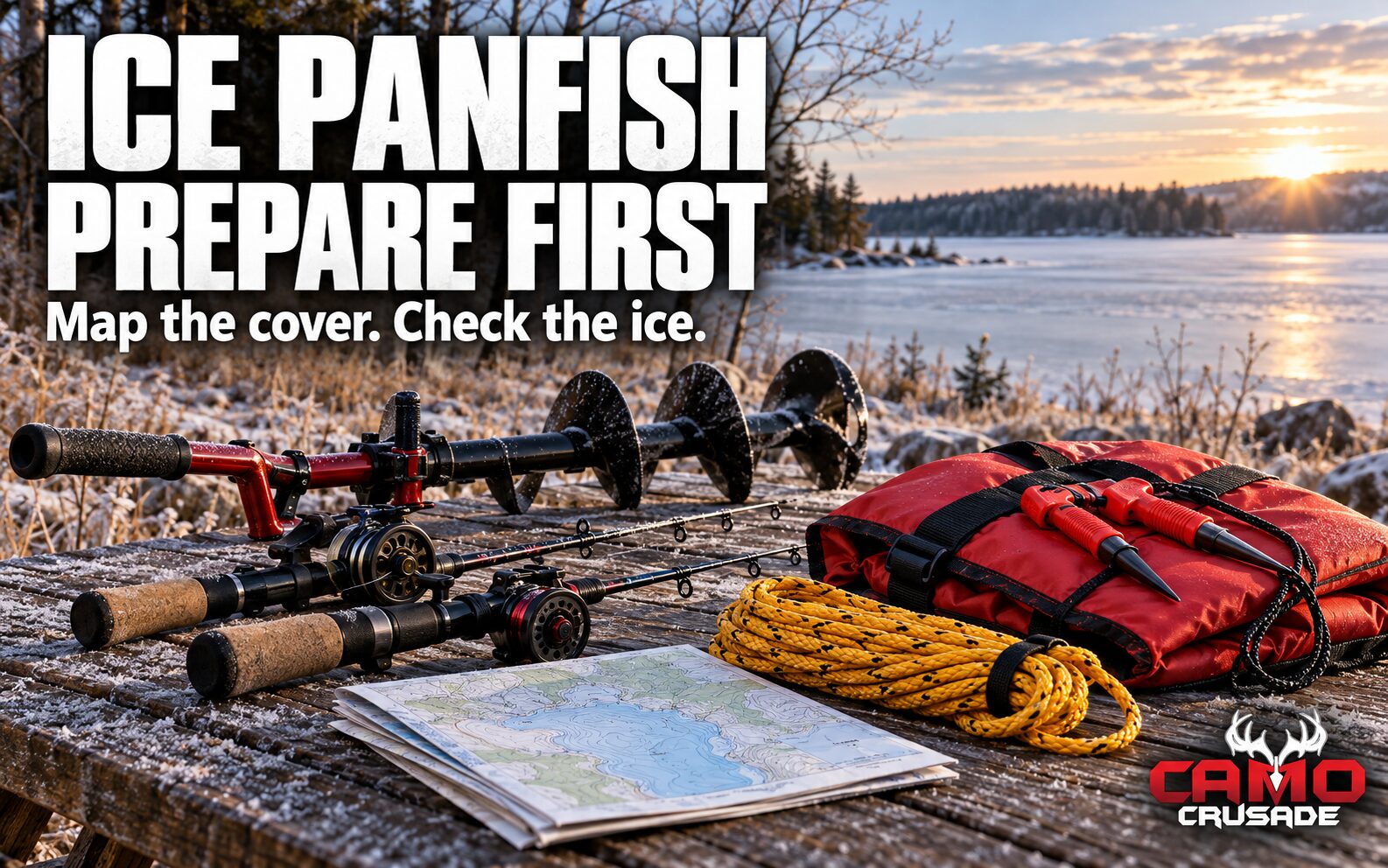
The first useful ice-fishing job can happen while your boots are still on dry ground. Sort the gear, study a lake map and decide how you will judge whether a trip should happen at all.
In-Fisherman’s introductory ice-fishing coverage describes small jigs and natural or artificial tipping baits for panfish. That keeps the fishing side approachable. The access decision deserves more care than a photograph of someone else’s first catch through the ice.
Give the fishing plan a modest scope
Choose a lake with the species you want and reliable legal access. Mark a few potential fishing areas rather than a route that requires crossing the entire lake. Keep the first outing manageable enough to learn the gear without pressure to reach a distant spot.
Prepare a small selection of jigs and a way to present them at repeatable depths. Inspect line, organize hooks and test electronics at home. Bring a measuring tool and confirm the current rules on lines, hooks, bait, harvest and shelters.
Separate the map from the ice decision
Minnesota DNR says there is no such thing as completely safe ice. It warns that thickness can vary sharply over short distances and that snow, current and other conditions affect strength. Its four-inch minimum guideline for travel on foot applies to new, clear ice; it is not a guarantee and does not apply unchanged to weaker ice.
Read the agency’s full guidance before a trip. Check conditions locally, measure repeatedly and do not treat another person’s tracks as evidence. Minnesota DNR specifically notes that checking with a chisel does not replace frequent thickness measurements. Avoid current areas and leave when conditions are uncertain.
Prepare the person as carefully as the tackle
Go with a companion, tell someone your plan and return time, and wear a foam life jacket or suitable buoyant gear. Carry accessible ice picks and a throw rope. Learn the local agency’s cold-water and ice-emergency guidance before you need it. Keep essential safety equipment accessible rather than buried beneath tackle.
For Southeast anglers traveling north, do not assume cold air or a booked room means the lake is ready. Ask about cancellation options and arrange another activity if the ice does not cooperate. The best first panfish trip is one you can postpone without feeling compelled to take a chance.