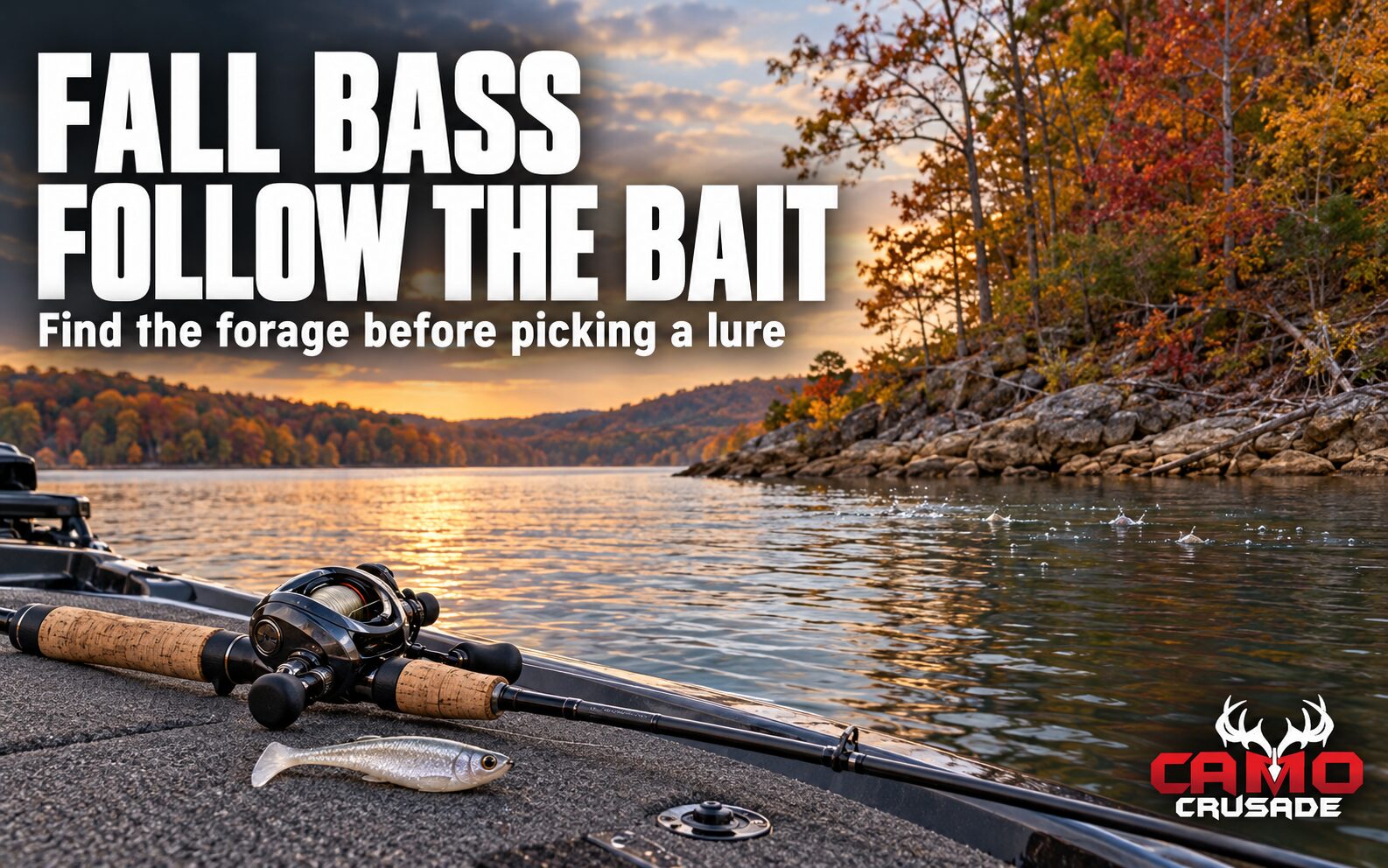
The tackle box is the easy part. Finding a stretch of water worth opening it on takes more thought. A favorite fall lure cannot help much if the baitfish have left the bank you are fishing.
Field & Stream’s fall bass guide makes a useful starting point: look for bait and the routes connecting shallow feeding areas with deeper water. That is a pattern to investigate, not a promise that every bass in a Southern reservoir has moved into the back of a creek.
Give the first hour a job
Pick one creek arm you can sample without spending the morning running the outboard. Check its entrance, an intermediate point and a protected pocket. At each stop, note bait activity, water clarity, cover and any bites. Compare those observations before committing the rest of the trip.
Missouri’s conservation department describes shad schools as an important fall clue and identifies flats, timber, rocky banks and docks as places to investigate. Its Lake of the Ozarks guidance also highlights points, brush piles and docks. Those examples help narrow a search; the lake you fish still has to supply the evidence.
Let the presentation answer a question
Carry a moving bait for exploring open lanes and a slower option for examining a particular piece of cover. Match a baitfish imitation to the approximate size of the forage you can actually see. If fish follow without taking it, change the retrieve before replacing everything tied to your rods.
A bank angler can use the same notebook approach. Choose legal public access with several casting angles and make a deliberate circuit. A bite beside the only remaining brush pile tells you more than another random cast into the middle of a cove. Keep the bank behind you clear before casting.
Keep the calendar in its place
A warm stretch in the Southeast may leave your lake looking different from a northern fishery on the same date. Record the conditions you encounter rather than copying a temperature or depth from a distant report. If the first three stops lack bait and bites, test a different part of the system.
Before launching, check access hours, current fishing rules and the forecast. Wear your life jacket. A useful fall pattern is one you can explain and safely revisit, rather than one you remember only as a lucky cast.