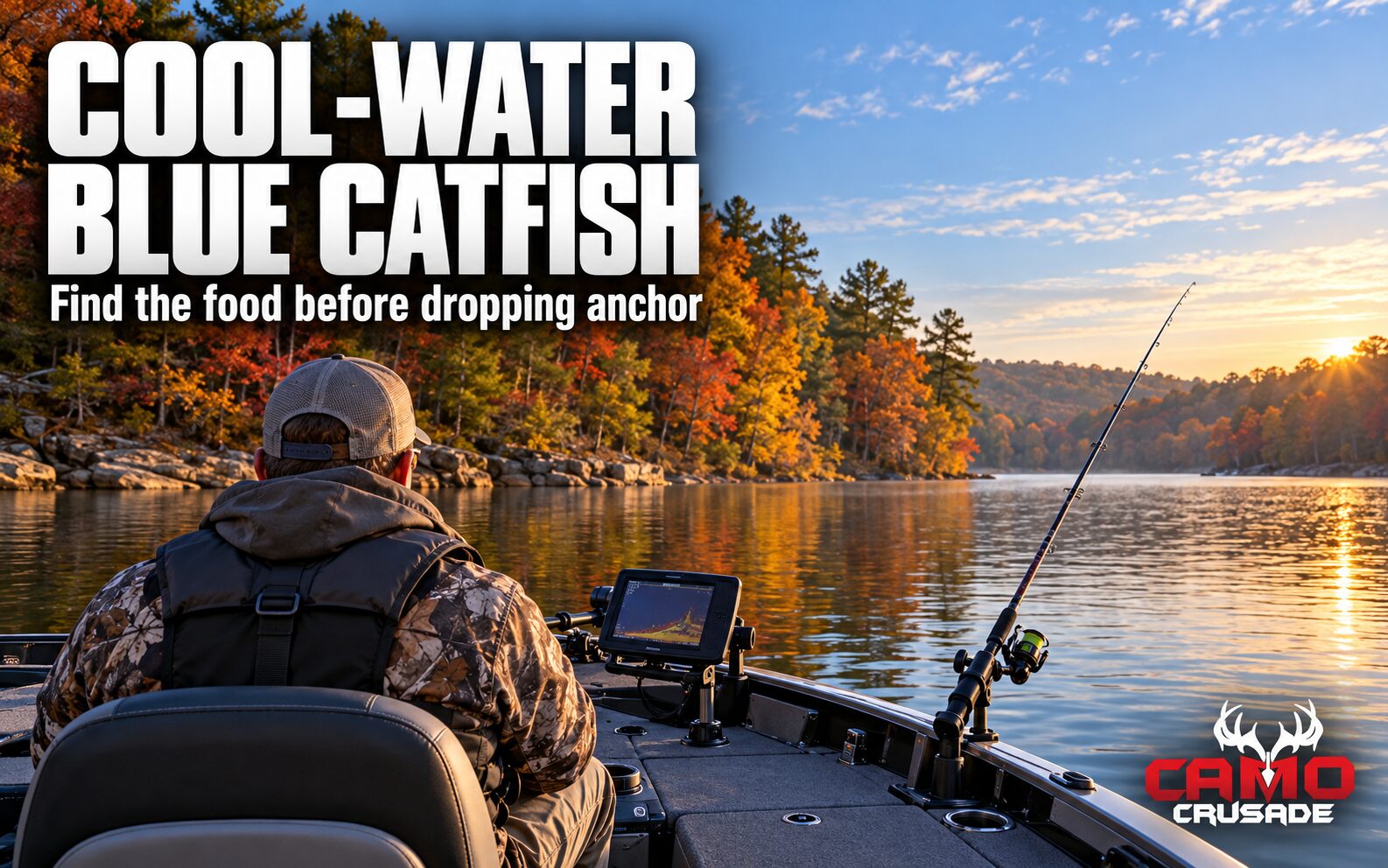
An anchored catfish boat ought to be parked there for a reason. The bend looks good, the bait is fresh and the rod holders are full—but what evidence says blue cats are using that particular stretch?
Carolina Sportsman’s report on anchored fishing puts the searching ahead of the waiting. The anglers it profiles look for forage and fish around defined bottom features before settling in. Their approach offers a better starting point than treating every deep hole as a guaranteed winter catfish address.
Build a short list before leaving the ramp
Study the chart and select a few places you can investigate within the day’s weather and boating limits. Give each one a reason: a channel turn, a distinct depth change or a nearby feeding area. Then check what is actually there. A map supplies possibilities; it does not show today’s fish.
South Carolina’s species account describes blue catfish in rivers and large creeks as well as major impoundments. It also lists a varied diet that includes fish and other aquatic organisms. Do not reduce that adaptable fish to one depth, one bait or one calendar date.
Keep the first setup manageable
North Carolina’s wildlife agency identifies cut gizzard shad as a favored hook-and-line bait. Use bait that is legal to collect, possess and fish in your location; a species permitted in one state may be restricted elsewhere. Keep your spread simple enough to manage promptly when a fish takes a bait.
Record where each presentation lands and which one produces. If the only bite comes from one part of the area, investigate that detail. When a stop remains unproductive, reassess the evidence rather than staying only because setting up took effort.
Let conditions choose the method
Anchoring is an option, not a requirement. Strong current, traffic, wind or a boat’s limitations can make a planned setup unsuitable. Follow your vessel’s anchoring guidance, avoid anchoring from the stern in current, wear a life jacket and choose different water when you cannot position safely.
Check local fish limits, bait rules and any consumption advisories before the trip. A cooler full of expectations is no substitute for a deliberate search and a setup you can control.