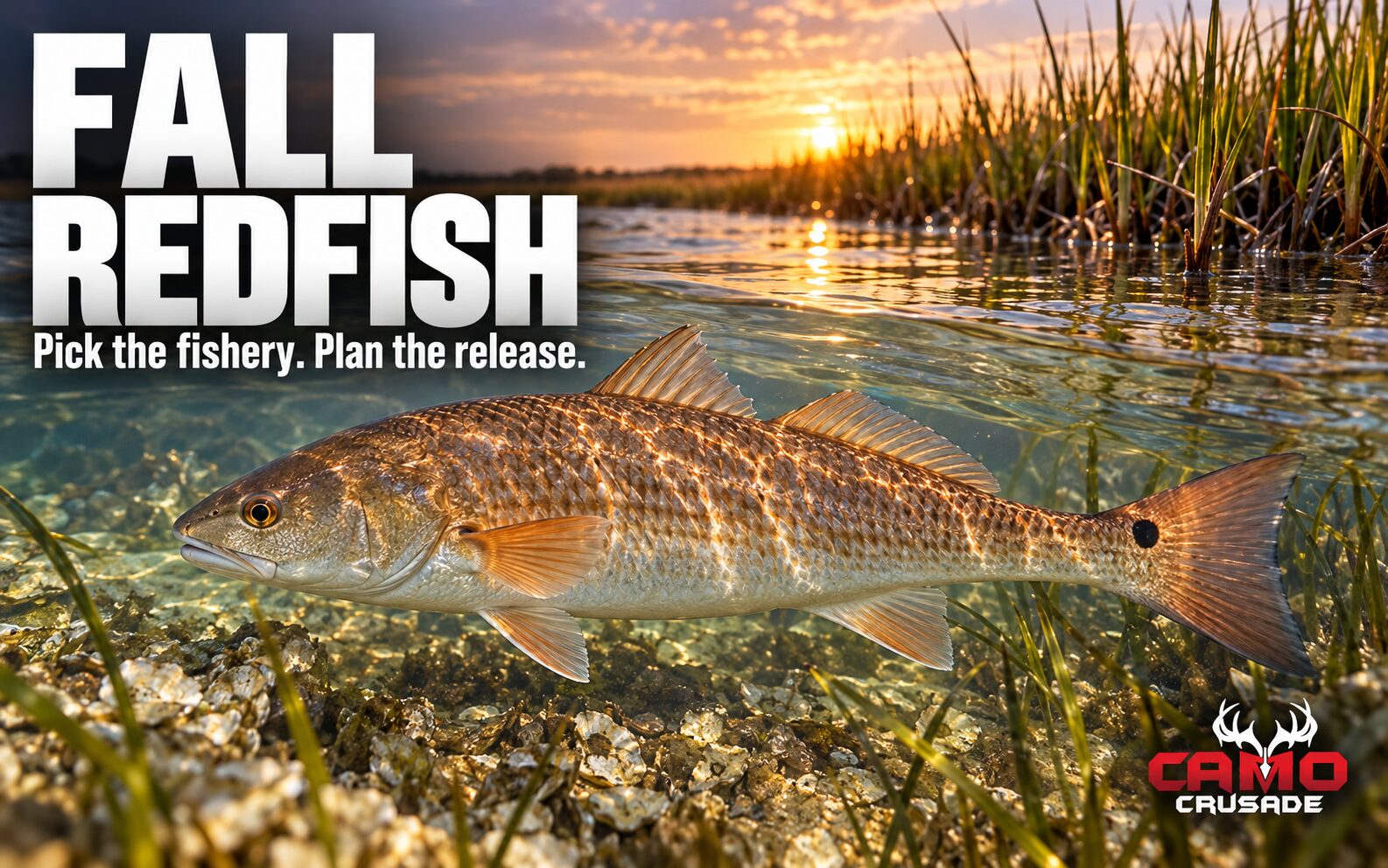
A quiet cast along a marsh edge and a heavy-current fight with an adult red drum are both redfishing. They are not the same trip. Decide which one you are preparing for before borrowing a tackle list from someone else’s report.
Sport Fishing’s bull-redfish coverage makes that distinction clear: adult fish can require a different approach from smaller drum in shallow water. The article’s regional examples also underline why one coastwide fall schedule is too simple.
Start with the water you can fish well
Texas Parks and Wildlife describes red drum around shallow grass flats, oyster reefs and deeper channels, as well as cuts along beaches. Those are useful habitat categories, not instructions to run to the nearest inlet regardless of conditions.
For a modest inshore outing, choose a launch and a route that fit your boat, experience and the forecast. Study the tide and the depth available on the return. A flat you entered with plenty of water may present a different exit later; build the route around that question before you start casting.
Keep the first approach quiet and simple
Observe before moving close. Look for bait activity and a casting lane that keeps the lure out of grass or shell. If a fish is visible, plan where the lure needs to travel before making the cast. A hurried second cast rarely improves a poor first approach.
Match tackle to the fish and cover you expect. Do not turn a bull-redfish encounter into an endurance test with an outfit selected for much smaller fish. Have the landing and dehooking equipment ready before someone hooks up.
Know the release plan before the photograph
Florida FWC recommends minimizing handling, using wet hands and supporting a fish’s weight rather than hanging it vertically by the jaw. Keep a fish in the water when practical and make the release decision promptly. Those habits belong in an ordinary weekend trip as much as a tournament.
Confirm current rules for the exact management area. Florida’s redfish rules vary by region, and its Indian River Lagoon region is catch-and-release only under the guidance checked for this article. Do not carry one area’s harvest allowance into another. Choose a fishery you can reach safely, handle the fish properly and leave with more than a copied report.