A brush pile can hold promise without producing a single bite. Before crossing it off your list, ask a simpler question: did your bait ever pass the level where the fish were holding?
In-Fisherman’s fall crappie coverage emphasizes locating baitfish and controlling the presentation’s depth. For CAMO Crusade readers, the useful lesson is to make each drop repeatable. A long afternoon of guessing is hard to learn from.
Separate the spot from the depth
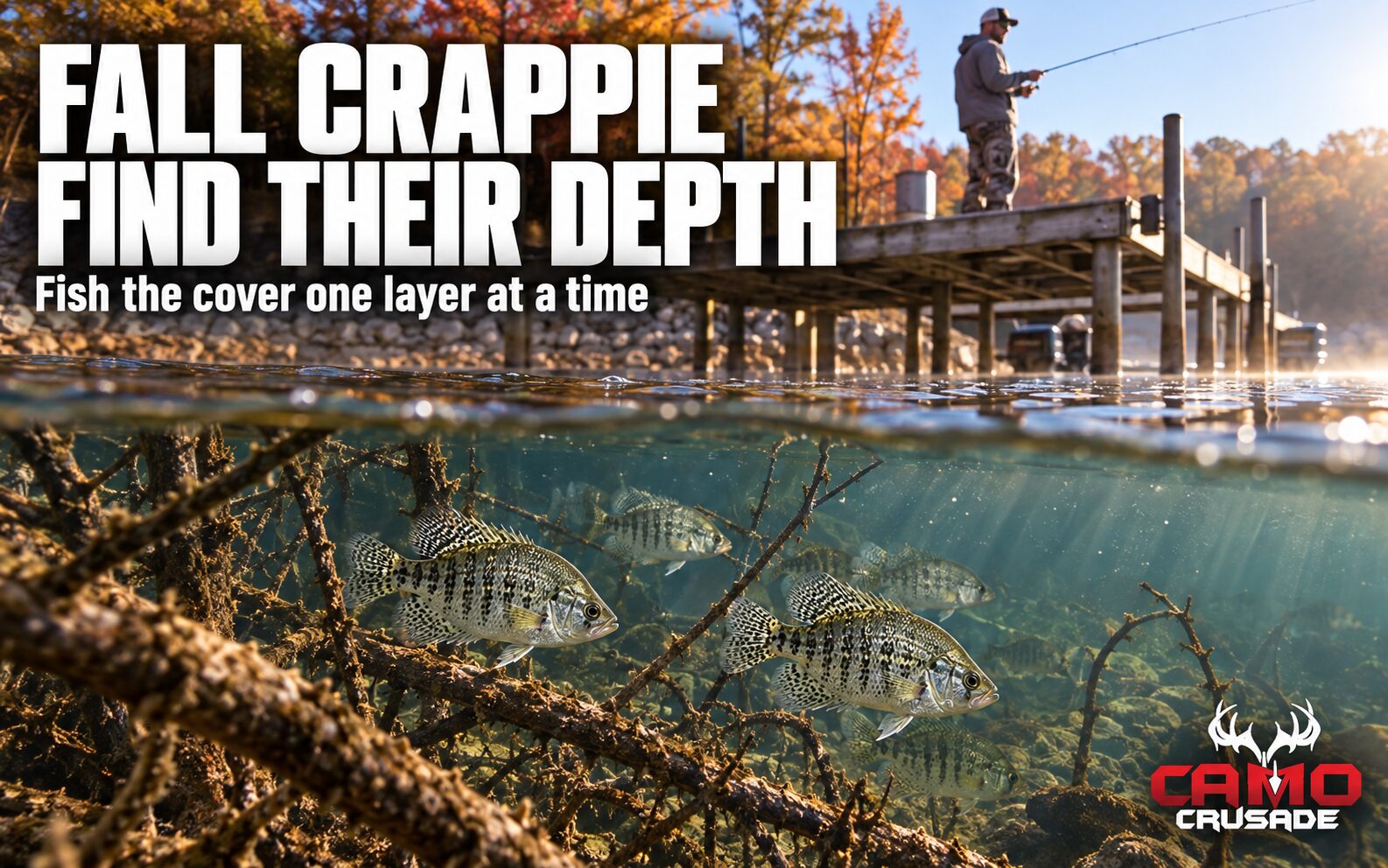
North Carolina’s wildlife agency lists brush, stumps and docks as useful white-crappie cover. It also describes deeper creek channels, roadbeds and submerged points as summer and early-fall locations, with another move toward shore possible in fall. That range explains why yesterday’s productive depth may not be today’s answer.
Choose a piece of cover you can fish carefully. If electronics show suspended fish, start with a presentation above their level and work toward them. Without electronics, a slip float or a measured line reference can help you compare depths instead of relying on how long a jig seemed to sink.
Make one adjustment at a time
Use a small jig or a legally obtained minnow where bait is allowed. Give the first depth a fair test, then change the setting a little. Keep the lure and location the same while you investigate depth; otherwise, you will not know which change mattered.
Once a fish bites, note the presentation, the distance from cover and the depth setting. Repeat that cast before moving to the next dock. If the second spot produces at a similar level, you have the beginning of a pattern worth checking elsewhere.
Keep a small-water option
You do not need a tournament boat to make this useful. A public pier near suitable cover can become a manageable practice area. Avoid crowding other anglers, casting across their lines or assuming that a private dock is open to visitors.
Check the water’s current size and creel limits before keeping fish, and confirm bait collection, transport and hook rules. Bring a measuring board and a way to count your catch. The goal is to leave with a clear explanation of the bites, whether the fish go home legally or swim away.