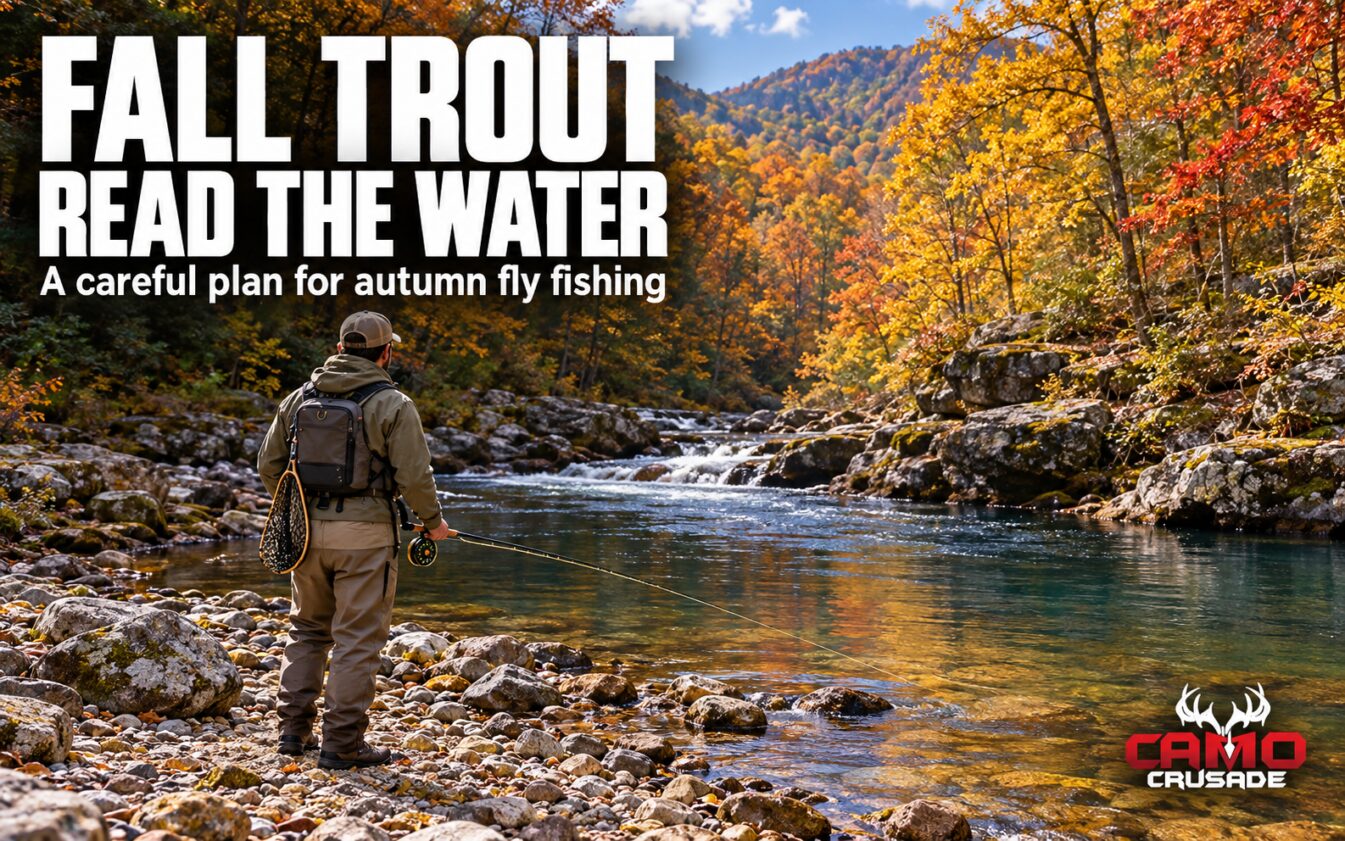
Fall trout fishing comes with a temptation: a large fish in shallow water looks easier to reach than anything you have seen all summer. Before making the cast, work out whether it is feeding or occupying spawning gravel.
Fly Fisherman’s autumn tactics coverage includes streamers and changing retrieves, but it also tells anglers to leave actively spawning trout alone. Those two ideas belong in the same plan. A productive fall outing should not depend on disturbing a fish trying to reproduce.
Look before stepping in
NOAA’s inland fishing guidance describes redds as cleaned gravel nests used by salmonids. It advises avoiding fishing and wading near them and leaving spawning fish alone. A pale gravel patch may deserve a wide berth even when no fish is visible above it.
Begin from the bank where possible. Study the pool, the route your line would take and the places you would have to step to land a fish. If reaching a promising run requires walking through suspected spawning habitat, choose another position or another run.
Make the first presentation count
On open water away from spawners, start with a fly you can present cleanly in the available space. A modest streamer provides a different question from a small nymph, but neither will fix repeated snags or uncontrolled line. Fish a manageable casting distance before trying to reach the far bank.
Change retrieve speed deliberately. Fly Fisherman’s advice to experiment is more useful than treating one aggressive strip as the answer all autumn. Note which part of the drift or retrieve produces interest, then try to repeat it without trampling more of the stream.
North Carolina readers: check the actual stocking notice
On September 23, 2026, NC Wildlife announced it would wait until November to stock Delayed Harvest Trout Waters. The agency cited summer heat, drought and continuing Hurricane Helene impacts. It also warned that stocking locations and angler access could differ from previous years. Do not assume a familiar October stocking has happened; consult the current update before driving.
Trout-water classifications can change the allowed tackle, bait possession and harvest rules. Read the signs and the current regulations for your exact reach. Keep the trip flexible enough to choose different water when access, flows or spawning activity make your first choice unsuitable.