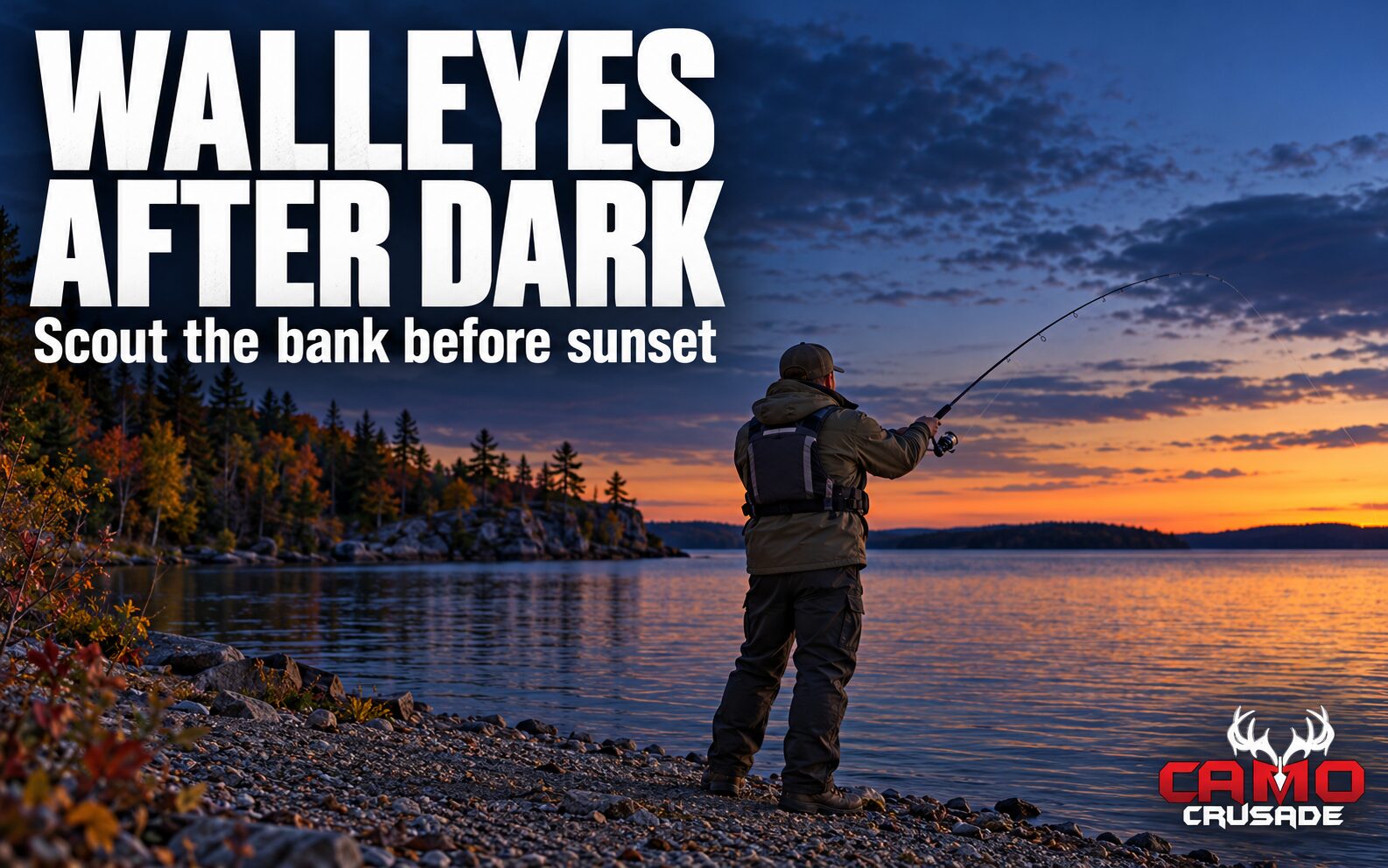
The best time to discover a loose bank, a closed gate or an awkward landing spot is while you can still see it. If fall walleyes have you planning an evening on shore, spend some of that enthusiasm on a daylight visit.
In-Fisherman’s shorecasting coverage identifies shoreline structure near deeper water as a useful starting point. Minnesota DNR also describes an autumn return toward shoreline areas for some walleyes, while noting that others remain deep. An evening bite is a possibility to test, not a promise that darkness brings every fish within casting range.
Choose access you can use twice
Walk the legal route to the water and the route back. Find a stable casting position with clear space behind it, somewhere to land a fish and enough room to step away from the edge. Check gate hours. A public access sign does not necessarily mean overnight use is allowed.
Look for a point, gravel bar, weed edge or close approach to deeper water that you can reach from that position. Mark useful landmarks before dusk. Do not plan on wading farther out after visibility disappears.
Start with a presentation you can repeat
Minnesota DNR includes small hard-bodied baitfish imitations among its autumn options. Choose a lure suited to the water you can reach and learn how it runs during daylight. Begin with a deliberate retrieve, then compare speed or pauses while keeping the casting lane consistent.
Carry a compact selection instead of emptying a large tackle bag on the bank. Put pliers, a light and your measuring tool where you can find them without rummaging. Check hooks and line before sunset, and keep spare tackle secured away from your footing.
Set a reason to leave
Tell someone your location and return time. Bring a backup light and a charged phone protected from water. Wear a life jacket near deep or cold water, and leave when weather, waves or footing make the spot unsuitable. Never enter a dam’s restricted area to reach a promising seam.
Confirm current seasons, local night-fishing restrictions, access rules and harvest limits for the exact water. Keep notes on when bites occurred and what conditions accompanied them. Your next evening should begin with better information than your first one.